
International Seminar “Current Issues in the Commercialisation of Intellectual Property”
On 21 November 2006, the International Seminar “Current Issues in the Commercialisation of Intellectual Property”, organised by LES Russia, was held in Moscow.
On 21 November 2006, the International Seminar “Current Issues in the Commercialisation of Intellectual Property”, organised by LES Russia, was held in Moscow. The seminar was attended by 34 participants from Russia and other countries of the former USSR.
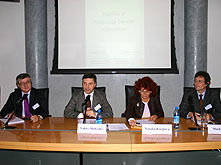
Opening the seminar, President of LES Russia, Doctor of Economics, Professor, Head of the Department of Foreign Economic Activity at the Academy of National Economy under the Government of the Russian Federation, N.N. Karpova, noted the priority role of intellectual property in the rapidly developing global market economy.
It was also emphasised that Russian businesses still lacked sufficient understanding of the importance of intellectual property. In this regard, the seminar was intended to demonstrate the great importance that leading foreign companies attach to intellectual property protection, intangible asset management, generating profits from licensing, and innovation strategy in their market activities.
It was also emphasised that Russian businesses still lacked sufficient understanding of the importance of intellectual property. In this regard, the seminar was intended to demonstrate the great importance that leading foreign companies attach to intellectual property protection, intangible asset management, generating profits from licensing, and innovation strategy in their market activities.
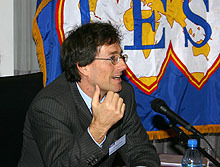
Dr Markus Jacobi of Isenbruck, Boesl, Hoerschler & Partners (Germany) delivered the first presentation, entitled “The Role of Technology Transfer”.
At the beginning of his presentation, Dr Jacobi illustrated the reasons for the growing importance of technology transfer using such pharmaceutical companies as Pfizer, GlaxoSmithKline, Sanofi-Aventis, Merck, Johnson & Johnson and others as examples. In recent years, there has been a steady trend towards a significant increase in the share of royalty income in the total profits of the world’s leading pharmaceutical companies.
He then examined in considerable detail various types of technology transfer agreements, possible measures companies can take to make more effective use of their intangible assets, the advantages and disadvantages of licensing at different stages of new product development, the drawbacks of exclusive licences, various payment terms in licensing, and many other highly interesting issues.
Dr Jacobi devoted the final part of his presentation to the importance of valuing a company’s intangible assets for the development of its market strategy and further growth, as well as for the payment of remuneration to inventors.
The audience responded enthusiastically to the presentation, as demonstrated by the active discussion and the large number of questions addressed to the speaker.
At the beginning of his presentation, Dr Jacobi illustrated the reasons for the growing importance of technology transfer using such pharmaceutical companies as Pfizer, GlaxoSmithKline, Sanofi-Aventis, Merck, Johnson & Johnson and others as examples. In recent years, there has been a steady trend towards a significant increase in the share of royalty income in the total profits of the world’s leading pharmaceutical companies.
He then examined in considerable detail various types of technology transfer agreements, possible measures companies can take to make more effective use of their intangible assets, the advantages and disadvantages of licensing at different stages of new product development, the drawbacks of exclusive licences, various payment terms in licensing, and many other highly interesting issues.
Dr Jacobi devoted the final part of his presentation to the importance of valuing a company’s intangible assets for the development of its market strategy and further growth, as well as for the payment of remuneration to inventors.
The audience responded enthusiastically to the presentation, as demonstrated by the active discussion and the large number of questions addressed to the speaker.
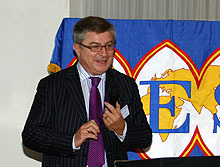
Dr Stephen Potter of Intellectual Ventures (USA) gave an equally interesting presentation entitled “What Should I Do with the Intellectual Property I Have?”
Once again, at the beginning of the presentation, the commercial importance of intellectual property in modern business was convincingly demonstrated. One example alone — showing that intangible assets account for 80 percent or more of the capitalisation of the world’s leading companies — speaks volumes.
A large part of the presentation was devoted to the effective and proper management of intellectual assets as part of intangible assets. The only issue is that most Russian companies do not yet have patent portfolios large enough to seriously discuss their effective management. However, we can hope for progress in the future. In any case, this experience should prove useful, if not now, then somewhat later.
Particular attention in the discussion of intellectual asset management strategies was paid to the creation of so-called spin-off companies based on new technologies. Such companies, being an effective tool for technology commercialisation, generally allow the inventor (or the licensing company) to remain in control of the project and receive substantial profits.
A great deal of useful information was also provided on offensive and defensive licensing strategies, the market policies of large and small companies, and other issues.
The discussion of the presentation continued for a considerable time.
Once again, at the beginning of the presentation, the commercial importance of intellectual property in modern business was convincingly demonstrated. One example alone — showing that intangible assets account for 80 percent or more of the capitalisation of the world’s leading companies — speaks volumes.
A large part of the presentation was devoted to the effective and proper management of intellectual assets as part of intangible assets. The only issue is that most Russian companies do not yet have patent portfolios large enough to seriously discuss their effective management. However, we can hope for progress in the future. In any case, this experience should prove useful, if not now, then somewhat later.
Particular attention in the discussion of intellectual asset management strategies was paid to the creation of so-called spin-off companies based on new technologies. Such companies, being an effective tool for technology commercialisation, generally allow the inventor (or the licensing company) to remain in control of the project and receive substantial profits.
A great deal of useful information was also provided on offensive and defensive licensing strategies, the market policies of large and small companies, and other issues.
The discussion of the presentation continued for a considerable time.
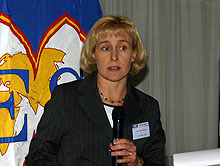
The third speaker, Ms Kaisa Fahllund of Hannes Snellman, Finland, gave a presentation entitled “Commercialisation of Intellectual Property — Opportunities and Legal Risks”.
The first part of the presentation was devoted to choosing a strategy for commercialising a new technology depending on the nature of the technical development, the market situation, the size of the company, and other factors.
The presentation then addressed the specific features of negotiation strategy, the need to conclude a confidentiality agreement, and the effectiveness of licensing both as a means of commercialising technology and as a means of achieving a balance between the interests of the licensor and the licensee. The key interests of licensors and licensees were analysed using specific examples.
The final part of the presentation provided a detailed analysis of how European competition law should be taken into account when drafting licence agreements involving Russian companies.
The presentation also generated considerable interest among the audience, as evidenced by the numerous questions addressed to the speaker.
The first part of the presentation was devoted to choosing a strategy for commercialising a new technology depending on the nature of the technical development, the market situation, the size of the company, and other factors.
The presentation then addressed the specific features of negotiation strategy, the need to conclude a confidentiality agreement, and the effectiveness of licensing both as a means of commercialising technology and as a means of achieving a balance between the interests of the licensor and the licensee. The key interests of licensors and licensees were analysed using specific examples.
The final part of the presentation provided a detailed analysis of how European competition law should be taken into account when drafting licence agreements involving Russian companies.
The presentation also generated considerable interest among the audience, as evidenced by the numerous questions addressed to the speaker.
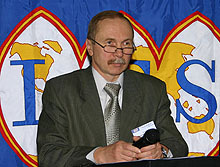
The final presentation, delivered by Mr Alexander Viktorovich Naumov, Deputy Director of the Department of Scientific, Technical and Innovation Policy of the Ministry of Education and Science of the Russian Federation, was entitled “Involving the Results of Scientific and Technical Activities in Economic Circulation, Taking into Account the Specific Features of the State Science and Education Sector”.
Given the forthcoming changes to Russian intellectual property legislation, the presentation was bound to attract considerable interest.
The speaker provided a detailed overview of legislative acts recently adopted by the Government of the Russian Federation aimed at regulating the disposal of rights to the results of scientific and technical activities, ensuring proper accounting of the results of civilian R&D, monitoring R&D results obtained using federal budget funds, stimulating innovation activity, and other related matters.
Given the forthcoming changes to Russian intellectual property legislation, the presentation was bound to attract considerable interest.
The speaker provided a detailed overview of legislative acts recently adopted by the Government of the Russian Federation aimed at regulating the disposal of rights to the results of scientific and technical activities, ensuring proper accounting of the results of civilian R&D, monitoring R&D results obtained using federal budget funds, stimulating innovation activity, and other related matters.
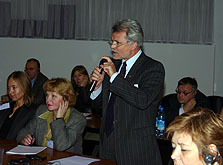
Undoubtedly, the highlight of the programme was the analysis of the forthcoming amendments to the Civil Code of the Russian Federation concerning intellectual property, which undoubtedly represented a revolutionary development in Russian legislation. The heated discussion on this topic continued for quite some time.
It is worth noting that all the presentations generated equally strong interest among the audience. The seminar can undoubtedly be regarded as one of LES Russia’s successful events.
It is worth noting that all the presentations generated equally strong interest among the audience. The seminar can undoubtedly be regarded as one of LES Russia’s successful events.
See also
