

Seminar “Judicial Practice in Disputes Concerning Infringement of Intellectual Property Rights and Licence Agreements”
On 3 June 2003, the seminar “Judicial Practice in Disputes Concerning Infringement of Intellectual Property Rights and Licence Agreements” was held in Moscow.
3 июня 2003
On 3 June 2003, the seminar “Judicial Practice in Disputes Concerning Infringement of Intellectual Property Rights and Licence Agreements” was held in Moscow.
The seminar was organised by the Russian Licensing Society (LES Russia) and the Russian Group for the Protection of Intellectual Property (AIPPI Russia).
The seminar was organised by the Russian Licensing Society (LES Russia) and the Russian Group for the Protection of Intellectual Property (AIPPI Russia).
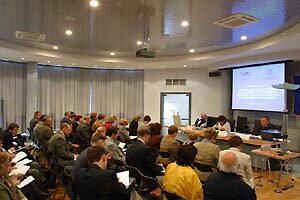
Opening remarks at the seminar were delivered by N.N. Karpova, President of the Russian Licensing Society (LES Russia), and V.V. Kuryshev, President of the Russian Group for the Protection of Intellectual Property (AIPPI Russia).
The Presidents of the associations noted that holding joint seminars had become a good tradition. The large number of seminar participants — 57 people from different countries, including Russia, Ukraine, Belarus, Kazakhstan, Kyrgyzstan and Armenia — demonstrated the strong interest of specialists in the seminar topics.
The seminar was held in the conference hall of the law firm Gorodissky & Partners.
The seminar was held in the conference hall of the law firm Gorodissky & Partners.
The first presentation, “Consideration of Intellectual Property Rights Disputes by Courts of General Jurisdiction”, was delivered by V.V. Gorshkov, Deputy Chairman of the Moscow City Court.
The speaker began by noting the particular attention that the Government of the Russian Federation had recently been paying to law enforcement practice in the field of intellectual property and cited the positive trend of an increasing number of court cases.
The seminar participants’ attention was drawn to current trends in law enforcement practice in this area. The speaker noted an increase in the number of criminal cases involving infringement of intellectual property rights brought before the courts; discussed problems in the courts’ interpretation of the concepts of “prior use” and “substantial damage”; noted an increase in the number of claims relating to employee inventions, problems with the appointment of experts and the conduct of expert examinations, an increase in the number of copyright-related claims, the importance of correctly identifying the subject matter in a statement of claim, and other issues.
The speaker began by noting the particular attention that the Government of the Russian Federation had recently been paying to law enforcement practice in the field of intellectual property and cited the positive trend of an increasing number of court cases.
The seminar participants’ attention was drawn to current trends in law enforcement practice in this area. The speaker noted an increase in the number of criminal cases involving infringement of intellectual property rights brought before the courts; discussed problems in the courts’ interpretation of the concepts of “prior use” and “substantial damage”; noted an increase in the number of claims relating to employee inventions, problems with the appointment of experts and the conduct of expert examinations, an increase in the number of copyright-related claims, the importance of correctly identifying the subject matter in a statement of claim, and other issues.
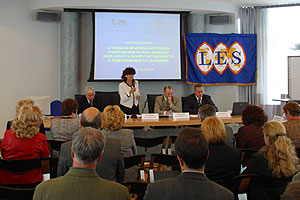
Mr Gorshkov noted the insufficient knowledge of intellectual property matters among some judges, particularly in the regions, and, as a consequence, the issuing of incorrect decisions. In his personal opinion, law enforcement practice would benefit from the establishment of a Patent Court in Russia and the active involvement of patent attorneys in the work of such a court. The speaker received numerous questions.
Y.G. Larina, Chair of the Intellectual Property Section of the Moscow Arbitration Court, gave a presentation entitled “Protection of Industrial Property Rights in Arbitration Courts”.
The speaker analysed in detail the most common mistakes made when drafting statements of claim relating to intellectual property and explained the proper approaches to participation by the parties in preliminary court hearings and in the main proceedings.
Ms Larina noted a significant increase in cases involving infringement of intellectual property rights on the Internet, as well as the increased complexity of cases involving conflicts between domain name rights and trademark rights. The importance of involving ROSNIIRОS in such proceedings as a third party, as the state body responsible for domain name registration, was also noted.
Like Mr Gorshkov, Ms Larina also pointed out problems related to the appointment of experts and the conduct of expert examinations, as well as the importance of correctly identifying the subject matter in the statement of claim.
As for cases involving breaches of licence agreements, at present most such cases are fairly formal in nature and concern claims seeking to have licence agreements declared null and void due to failure to comply with registration requirements at Rospatent, failure to include certain essential terms in licence agreements, and similar issues.
Ms Larina also pointed to the difficulties faced by courts when patent attorneys are not involved. The presentation generated lively interest among the audience.
Both speakers noted the usefulness of holding such meetings with an audience consisting mainly of patent attorneys, since the feedback also provides the speakers themselves with valuable practical information.
The presentation “From Judicial Practice in Disputes Concerning Breach of Licence Agreements Relating to Intellectual Property” by N.V. Mesyashnaya, Patent Attorney at the Recherche Patent Bureau (Moscow), was also very well received.
Using two practical examples of court proceedings concerning the invalidation of licence agreements, Ms Mesyashnaya demonstrated the complexity and unpredictability of court decisions in this area. It was shown how a single word or phrase in a licence agreement can play an important role in a court’s decision.
After the seminar, a reception was held, during which the participants continued discussing the presentations and networking.
Y.G. Larina, Chair of the Intellectual Property Section of the Moscow Arbitration Court, gave a presentation entitled “Protection of Industrial Property Rights in Arbitration Courts”.
The speaker analysed in detail the most common mistakes made when drafting statements of claim relating to intellectual property and explained the proper approaches to participation by the parties in preliminary court hearings and in the main proceedings.
Ms Larina noted a significant increase in cases involving infringement of intellectual property rights on the Internet, as well as the increased complexity of cases involving conflicts between domain name rights and trademark rights. The importance of involving ROSNIIRОS in such proceedings as a third party, as the state body responsible for domain name registration, was also noted.
Like Mr Gorshkov, Ms Larina also pointed out problems related to the appointment of experts and the conduct of expert examinations, as well as the importance of correctly identifying the subject matter in the statement of claim.
As for cases involving breaches of licence agreements, at present most such cases are fairly formal in nature and concern claims seeking to have licence agreements declared null and void due to failure to comply with registration requirements at Rospatent, failure to include certain essential terms in licence agreements, and similar issues.
Ms Larina also pointed to the difficulties faced by courts when patent attorneys are not involved. The presentation generated lively interest among the audience.
Both speakers noted the usefulness of holding such meetings with an audience consisting mainly of patent attorneys, since the feedback also provides the speakers themselves with valuable practical information.
The presentation “From Judicial Practice in Disputes Concerning Breach of Licence Agreements Relating to Intellectual Property” by N.V. Mesyashnaya, Patent Attorney at the Recherche Patent Bureau (Moscow), was also very well received.
Using two practical examples of court proceedings concerning the invalidation of licence agreements, Ms Mesyashnaya demonstrated the complexity and unpredictability of court decisions in this area. It was shown how a single word or phrase in a licence agreement can play an important role in a court’s decision.
After the seminar, a reception was held, during which the participants continued discussing the presentations and networking.
See also
